
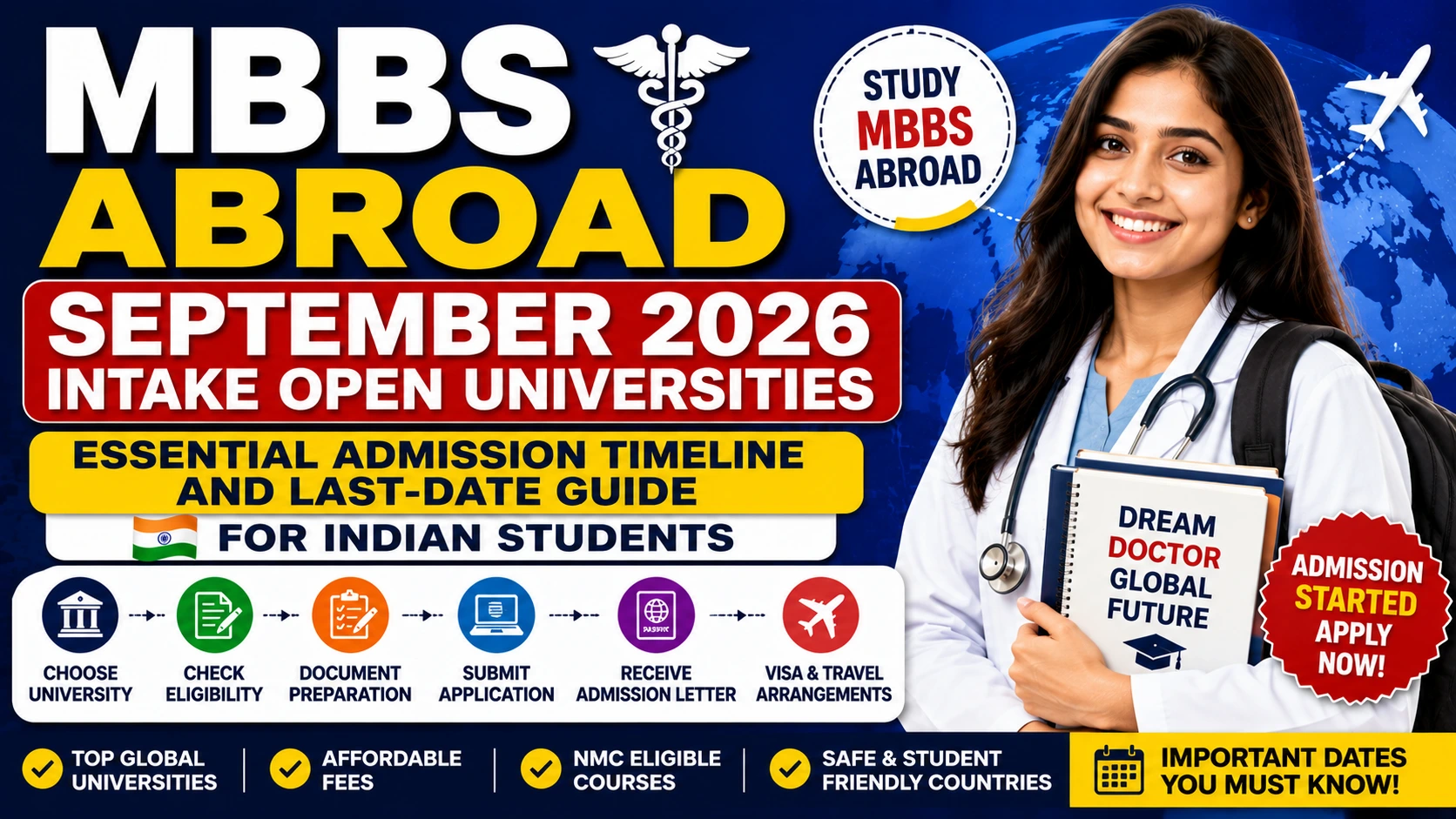
NEET 2026 Round 1 choice filling procedure is a crucial stage for all medical aspirants. The choices you make during this period can have a huge impact on your future in your educational and professional career. This guide explains the important factors to be considered when deciding whether to get a seat in India or get your MBBS abroad, so you can make an informed decision.
NEET 2026 Counseling Process: How to Apply
The Medical Counseling Committee (MCC) does centralized counseling of 15% All India Quota (AIQ) seats in government medical colleges and all seats in deemed/central universities, AIIMS, JIPMER and AFMC. State level counseling is then held for the remaining 85% of seats in state government colleges and private colleges.
In Round 1, candidates need to register, pay the counseling fee and fill their college preferences. Choice filling window is the time when you can list your preferred colleges according to your priority. The choice locking facility is one of the most important steps in this process as it locks in your preference. Once locked, you can’t change your selections.
Key Factors to Consider in Round 1 Selections
Before you lock your choices, consider these essential factors:
Your NEET Score & Your Rank
Your college options depend on where you land on the rank. Assess your score realistically and also the last year’s cut off trends of the colleges you want. If your rank is close to the closing rank of your desired college, it is better to lock a seat in Round 1. If you are having a higher rank like under 10,000 you have good chance of getting seat in top government college and you should go ahead with locking the choices.
If you are in the middle of the ranking, you may be wondering whether to go to a private college with high fees or an undesirable location. This is when you need to evaluate your options.
The Problem of “Wait or Lock”
Candidates face a big dilemma: to lock in their choices and secure a seat, or to wait for a better option in the later rounds. If your choices are locked in Round 1 and you are allotted a seat then you have to report to the college and pay the admission fee. But you will be eligible for upgradation in Round 2 that means if you get better college in next round you can shift.
If you decide not to lock your choices, you lose any seat that could have been allocated to you in Round 1 and can only participate in the next round. This strategy is good only if you are very sure about your rank and sure of getting a seat in a much better college later on.
Financial commitment analysis
Studying MBBS in India especially in private medical college is a huge financial investment. The fees in many private colleges range from `15 lakh to `50 lakh per year which can amount to a huge sum in five-and-a-half years. However, studying MBBS abroad can be more cost-effective. The total expenses, including tuition fees and living expenses, are generally in the range of ₹40 lakh to ₹1.2 crore for the whole six-year course, depending on the country and university.
You have to be honest about your family’s financials. Considering a private seat in India? Compare the total cost of education in India with a top ranked NMC approved university abroad.
Country-Specific Application Deadlines
| Private MBBS (India) | ₹60 lakh–1.2 crore | Qualifying | Aug–Sep 2026 |
| Kyrgyzstan / Uzbekistan | ₹15–25 lakh | Qualifying | September 2026 |
| Russia | ₹18–40 lakh | Qualifying | September 2026 |
| Georgia | ₹20–35 lakh | Qualifying | September 2026 |
What to look for in MBBS Abroad
Opting for MBBS abroad is not an easy decision when you have to choose between a low-ranked seat in India. It calls for careful consideration of many aspects. Here’s a balanced look at the pros and cons.
Advantages of Pursuing MBBS Abroad
Affordable education: Countries such as Russia, Kazakhstan, Georgia and Kyrgyzstan provide quality medical education at a fraction of the cost of Indian private colleges.
NMC Recognition: Most of the top medical universities abroad are NMC recognized and hence the graduates are eligible to appear for the NExT exam and practice in India.
Global Exposure: An opportunity to learn about different health care systems, an international exposure and a diverse peer group.
Easy Admission Process: Usually admission is based on NEET qualification and there is no separate entrance test like India.
English Medium of Instruction: The MBBS course is taught in English in many universities and there is no language barrier in learning.
Challenges & Disadvantages to Study MBBS Abroad
FMGE/NExT Pass Rate: The FMGE (Foreign Medical Graduates Examination) was replaced with NExT which had a low pass rate for graduates of some countries. NExT is being introduced so as to standardize examination but you need to research the past record of the university to judge the quality of education.
Quality of Education Education standards can vary significantly between universities and between countries. Admission should be preceded by prior research and university verification.
Distance and Adjustment Moving to a foreign country means adjusting to a new culture, climate, food and social environment which can be difficult for some students.
Back To India: After completing your MBBS abroad, you have to clear the NExT exam to practice in India. This is a compulsory step which will require dedicated preparation along with your foreign curriculum.
Important questions to ask before you decide
Instead of reacting and making a snap decision, ask yourself these important questions. The answers will help you decide what is the best thing to do.
What does it really cost? Is it easy for your family to pay the fees of private medical seats in India? Or wouldn’t it be better spent studying abroad without having to compromise quality?
Where are we with NMC compliance? Are you planning to study in a foreign university? Is it on the list of approved medical colleges by the NMC? This is not negotiable.
What is your long range career goal? Will you practice in India or abroad? If your end goal is to work in India then NMC recognition and a good NExT pass rate are most important.
Checked the college’s credentials, have you? Have you done your due diligence on the university’s accreditation, faculty, infrastructure and clinical exposure opportunities?
Are you ready for the change? Are you ready for the cultural and academic challenges of studying abroad? This means being away from family and adapting to a new education system.
Action Points Immediate
At this point, you should be concentrating on the following:
Secure your NEET choices: In the choice filling window, list out all the colleges you are willing to accept in India, government and private. “Make your decisions after much reflection.
Complete your applications for MBBS Abroad in Top NMC approved universities and secure your NEET Abroad Applications. Please be aware that September is the main intake for abroad and deadlines for many universities are approaching fast.
University Credentials Check: Before you make any commitment, always make sure to check the NMC compliance of the foreign university you propose to join by checking the university listing on the official NMC and WHO/IMED websites.
The decision to lock a seat in NEET Round 1 or to go for MBBS abroad is a very personal one and requires a careful consideration of a number of factors. There is no one “right” choice for everyone; the right choice depends on your own academic record, financial situation and career goals.